In modern industrial packaging lines, accuracy, speed, and consistency are critical factors that directly impact productivity and profitability. The demand for automation in packaging has significantly increased, especially in sectors dealing with granular products such as food, agriculture, chemicals, and pharmaceuticals. One of the most essential solutions driving this efficiency is the automatic granule filling machine, designed to ensure precise weighing and consistent filling performance across various production environments.
An automatic system not only minimizes human error but also enhances operational speed and product uniformity. Whether you are handling rice, sugar, seeds, fertilizer, or plastic granules, the right filling system can dramatically improve your production output while maintaining strict quality standards.
This article explores everything you need to know about automatic granule filling systems, including working principles, components, advantages, applications, and how to choose the right machine for your production line.
What is a Granule Filling Machine?
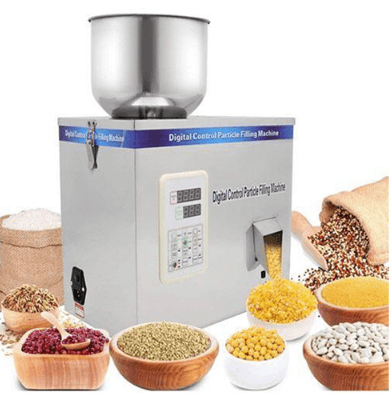
A granule filling machine is an automated packaging equipment designed to accurately measure and fill granular products into bags, bottles, pouches, or containers. It uses advanced weighing technology, typically based on load cells or volumetric systems, to ensure each package contains the exact predetermined weight.
Unlike manual filling methods, which are prone to inconsistency and waste, automatic machines deliver high precision and repeatability. They are widely used in industries that require strict weight control and hygienic packaging standards.
The machine can handle a wide range of free-flowing granular materials, including:
- Rice, wheat, and grains
- Sugar and salt
- Coffee beans
- Seeds and nuts
- Fertilizers and agrochemicals
- Plastic pellets and industrial granules
By integrating automation into the packaging process, manufacturers can achieve higher efficiency and reduce labor dependency.
Working Principle of Automatic Granule Filling System
The working mechanism of an automatic granule filling machine is based on a combination of feeding, weighing, and dispensing processes. Each step is carefully controlled to ensure accuracy and efficiency.
1. Material Feeding
Granules are loaded into a storage hopper, which feeds the material into the weighing system. A vibration or gravity-based feeder ensures smooth and consistent flow.
2. Weighing System
At the core of the machine is a high-precision load cell system. It continuously measures the weight of the granules being dispensed. Once the preset weight is reached, the feeding process stops automatically.
3. Filling and Discharge
After accurate weighing, the material is released into packaging units such as bags or containers. The discharge system ensures minimal spillage and high-speed operation.
4. Sealing and Output (Optional Integration)
In fully automated lines, the filling machine is often integrated with sealing, labeling, and conveyor systems for a complete packaging solution.
Key Components of a Granule Filling Machine
Understanding the core components helps in evaluating machine quality and performance.
1. Hopper System
The hopper stores raw materials before processing. It is designed to maintain smooth flow and prevent clogging.
2. Weighing Unit
This is the most critical component, ensuring accurate measurement using load cell technology.
3. Control Panel (PLC System)
Modern machines use PLC-based control panels for setting parameters such as weight, speed, and batch quantity.
4. Feeding Mechanism
This includes vibratory feeders or screw feeders that regulate material flow into the weighing system.
See also: Best Features Of An Online Manual’s Template For Software Businesses
5. Discharge Outlet
The outlet ensures clean and precise release of weighed materials into packaging units.
6. Conveyor System (Optional)
Used in fully automated production lines for continuous movement of packages.
Features and Benefits of Automatic Granule Filling Machines
Modern packaging industries rely heavily on automation due to its multiple operational advantages.
High Precision Weighing
The machine ensures each package meets exact weight requirements, reducing product loss and customer complaints.
Increased Production Speed
Automated systems can handle hundreds or even thousands of packages per hour, significantly improving productivity.
Reduced Labor Costs
Automation minimizes the need for manual labor, lowering operational costs.
Hygienic Operation
Since the system is enclosed and automated, it reduces contamination risks, especially important in food and pharmaceutical industries.
Versatile Application
A single machine can handle multiple types of granular products with minimal adjustments.
Easy Operation
User-friendly PLC interfaces allow operators to control the entire process efficiently.
Low Maintenance
High-quality machines are designed for durability and require minimal maintenance over time.
Applications of Granule Filling Systems
The versatility of automatic filling machines makes them suitable for various industries.
Food Industry
Used for packaging rice, sugar, beans, spices, and snacks with high accuracy.
Agriculture Sector
Ideal for fertilizers, seeds, and animal feed packaging.
Chemical Industry
Handles granular chemicals, detergents, and industrial raw materials safely.
Pharmaceutical Industry
Used for filling granular medicine formulations with strict accuracy requirements.
Plastic Industry
Commonly used for plastic pellets and polymer granules in manufacturing units.
Types of Granule Filling Machines
Different production needs require different machine configurations.
1. Semi-Automatic Granule Filling Machine
Requires partial human involvement, suitable for small to medium-scale businesses.
2. Fully Automatic Granule Filling Machine
Operates without manual intervention, ideal for large-scale industrial production.
3. Multi-Head Weighing Filling System
Uses multiple weighing heads for ultra-fast and highly accurate filling.
4. Volumetric Filling Machine
Measures granules based on volume instead of weight, suitable for less precision-critical applications.
Why Industries Prefer Automatic Systems
The shift from manual to automated packaging is driven by efficiency and consistency. Companies adopting advanced systems such as the granule filling machine experience significant improvements in production control, product quality, and operational scalability.
Automation also supports compliance with international packaging standards, making it easier for manufacturers to expand into global markets.
How to Choose the Right Granule Filling Machine
Selecting the right machine is crucial for long-term efficiency and ROI.
1. Product Type
Different granules have different flow characteristics. Choose a machine compatible with your material.
2. Production Capacity
Evaluate your daily output requirements before selecting machine speed and capacity.
3. Accuracy Level
For industries like food and pharmaceuticals, high-precision systems are essential.
4. Machine Material
Stainless steel construction is preferred for hygiene and durability.
5. Automation Level
Choose between semi-automatic and fully automatic based on your budget and production scale.
6. After-Sales Support
Reliable technical support ensures long-term machine performance.
Advantages of Investing in Advanced Filling Technology
Investing in modern packaging automation is not just about convenience it is a strategic business decision. Advanced systems improve:
- Operational efficiency
- Product consistency
- Market competitiveness
- Resource utilization
- Long-term profitability
As industries continue to grow, automation becomes a necessity rather than a luxury.
Future of Granule Packaging Automation
The future of packaging technology is moving toward smarter, AI-integrated systems. Innovations such as IoT monitoring, real-time data tracking, and predictive maintenance are transforming how packaging lines operate.
Future granule filling machine systems will likely feature:
- Smart sensors for real-time adjustments
- Cloud-based production monitoring
- Energy-efficient motors
- Enhanced automation with minimal human intervention
These advancements will further increase efficiency while reducing operational costs.
Conclusion
The automatic granule filling machine has become an essential part of modern packaging industries. With its ability to deliver high accuracy, speed, and reliability, it plays a vital role in improving production efficiency and maintaining product quality.
From food processing to chemical manufacturing, its applications are vast and continuously expanding. Businesses that invest in advanced automation systems are better positioned to meet growing market demands and maintain a competitive edge.
Choosing the right machine depends on production needs, material type, and desired automation level, but the long-term benefits make it a valuable investment for any industrial operation.
FAQs
1. What is a granule filling machine used for?
It is used for accurately weighing and filling granular products such as rice, sugar, seeds, fertilizers, and plastic pellets into packaging containers.
2. How does an automatic granule filling machine work?
It works by feeding material into a weighing system, measuring the exact weight using load cells, and then dispensing it into packaging units.
3. Is the machine suitable for all types of granules?
Yes, most machines are designed to handle a wide variety of free-flowing granular materials with adjustable settings.
4. What industries use granule filling machines?
Food, agriculture, chemical, pharmaceutical, and plastic industries widely use these machines for packaging operations.
5. What is the advantage of automation in filling machines?
Automation improves accuracy, reduces labor costs, increases production speed, and ensures consistent packaging quality.