Not every pouch packing machine is built for the same job, and picking the wrong type for your product or pouch style is one of the most common, and costly, mistakes manufacturers make when scaling up production. This guide breaks down the main categories of pouch packing machines, explains what makes each one suited to specific products and pouch styles, and gives you a practical framework for narrowing down which type fits your operation, so your investment matches your actual production needs rather than a generic industry default.
Why Machine Type Selection Matters So Much
Pouch packing machines differ not just in speed, but in how they form pouches, how they handle different product consistencies, and how flexible they are for future product line changes. Choosing based on price or brand reputation alone, without matching the machine’s core mechanism to your product and pouch requirements, often leads to bottlenecks, excessive downtime, or inconsistent seal quality down the line.
Machine Types by Forming Method
Vertical Form-Fill-Seal (VFFS)
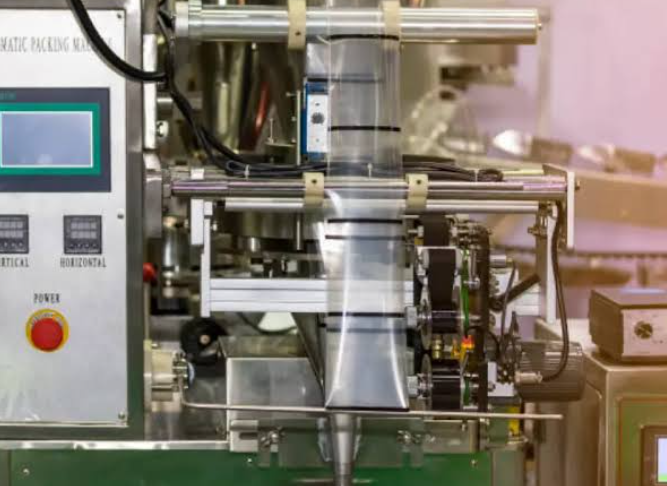
Forms pouches from a continuous roll of film in a vertical orientation, filling and sealing as the film moves downward. This is the most common machine type for high-volume production of standard pouches like flat-bottom bags, pillow pouches, and gusseted bags, especially for snacks, powders, and granular products.
Horizontal Form-Fill-Seal (HFFS)
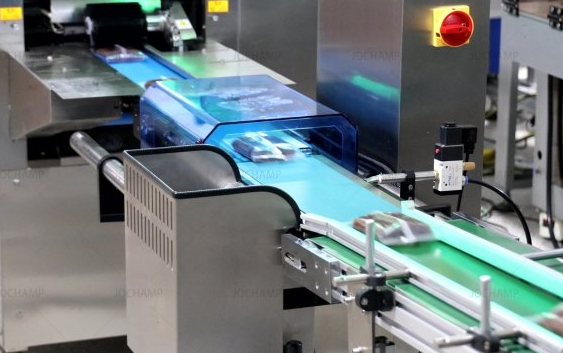
Forms and fills pouches while they move horizontally, which is gentler on delicate products and better suited to flat or non-free-flowing items. Common in wet wipe production, certain confectionery products, and items sensitive to the drop-fill motion typical of vertical machines.
Pre-Made Pouch (Premade) Machines
Rather than forming pouches in-line, these machines load and fill pouches that were manufactured separately. This is the standard approach for premium packaging formats like stand-up pouches with zippers, spouts, or specialty printing that’s difficult to produce reliably in-line.
Rotary Pouch Machines
Use a rotary indexing mechanism to move pouches through sequential stations for opening, filling, and sealing. Generally faster and more precise than linear systems, making them common in high-volume operations where consistency at speed is critical.
Machine Types by Filling Mechanism
- Auger fillers: best for powders and fine granular products, using a rotating screw mechanism to dispense precise volumes.
- Multi-head weighers:best for solid or irregularly shaped products like snacks, produce, or hardware components, using weight-based rather than volume-based dosing.
- Piston and pump fillers: best for liquids and semi-liquids, offering precise volumetric dosing for products like sauces, oils, or personal care liquids.
- Volumetric cup fillers: best for free-flowing granular products where speed matters more than extreme precision.
Choosing the Right Machine Type
| If Your Priority Is… | Consider This Machine Type | Why |
| High-volume standard pouches | Vertical Form-Fill-Seal (VFFS) | Fast, continuous, cost-effective for standard formats |
| Delicate or flat products | Horizontal Form-Fill-Seal (HFFS) | Gentler handling, avoids drop-fill stress |
| Premium stand-up pouches with spouts/zippers | Pre-Made Pouch Machine | Supports complex pouch features hard to form in-line |
| Maximum speed and precision at scale | Rotary Pouch Machine | Sequential stations optimize speed and consistency |
| Fine powders | Auger Filler configuration | Precise volumetric dosing for powder consistency |
| Irregular solids (snacks, hardware) | Multi-Head Weigher configuration | Weight-based accuracy regardless of shape |
| Liquids or semi-liquids | Piston/Pump Filler configuration | Accurate volumetric dosing for flowable products |
Practical Questions to Narrow Down Your Choice
- What’s your product’s physical form, powder, liquid, granule, or solid, and does it flow freely or require special handling?
- What pouch style do you need, and does it require features like spouts, zippers, or specialty printing that may require a pre-made pouch approach?
- What’s your required throughput, and does that volume justify a higher-speed rotary system versus a standard linear machine?
- How often will you need to change between products or pouch sizes, and how much changeover time can your operation tolerate?
- Do you need the machine to integrate with existing upstream feeding or downstream cartoning/palletizing equipment?
Decision Path
Free-FlowingPowder/GranuleDelicate/Flat ProductYesNo, High Volume StandardPouchesYesNoIdentify Product TypeFree-Flowing or Delicate?VFFS with Auger orVolumetric FillerHFFS SystemNeedSpouts/Zippers/PremiumFormat?Pre-Made Pouch MachineNeed Maximum Speed?Rotary Pouch MachineStandard VFFS/HFFS Line
Machine type comparisons and packaging industry trend data published by PMMI can be a useful reference when validating your own decision framework, while machinery safety design across all these forming methods is generally benchmarked against ISO 12100.
Common Mistakes When Choosing a Machine Type
Defaulting to VFFS Without Checking Product Sensitivity
VFFS is the most widely used pouch machine type, but applying it to a delicate or flat product that would benefit from horizontal handling can lead to inconsistent fills or product damage during the drop-fill motion.
Underestimating the Cost Difference for Premium Pouch Features
Buyers sometimes assume standard VFFS/HFFS equipment can produce stand-up pouches with spouts or zippers, only to discover a pre-made pouch machine is required, adding unplanned cost to the project.
Choosing Rotary Speed Before Volume Justifies It
Rotary pouch machines offer excellent speed and precision, but the added cost only pays off once production volume is high enough to use that capacity consistently. For lower or highly variable volumes, a standard linear system is often the more cost-effective choice.
Planning for Future Pouch Style Changes
Brands that start with standard VFFS pouches for cost efficiency sometimes plan a future move to premium stand-up formats as the product line matures. If this kind of format evolution is likely, discussing modular or upgrade-path options with equipment suppliers early can help avoid a full equipment replacement later, since some manufacturers offer platforms designed to accommodate additional pouch styles or filling mechanisms as production needs change.
See also: When Does a Data Room Become Essential for Business Transactions
Matching Machine Type to Your Actual Production Needs
The right pouch packing machine depends on your product’s physical characteristics, your required pouch style, and your realistic production volume not on defaulting to the most common or highest-speed option available. Whether that means a VFFS line for standard powder pouches, an HFFS system for delicate products, or a pre-made pouch machine for premium stand-up formats, matching the machine’s core mechanism to your actual requirements remains the clearest path to avoiding costly bottlenecks after installation.